

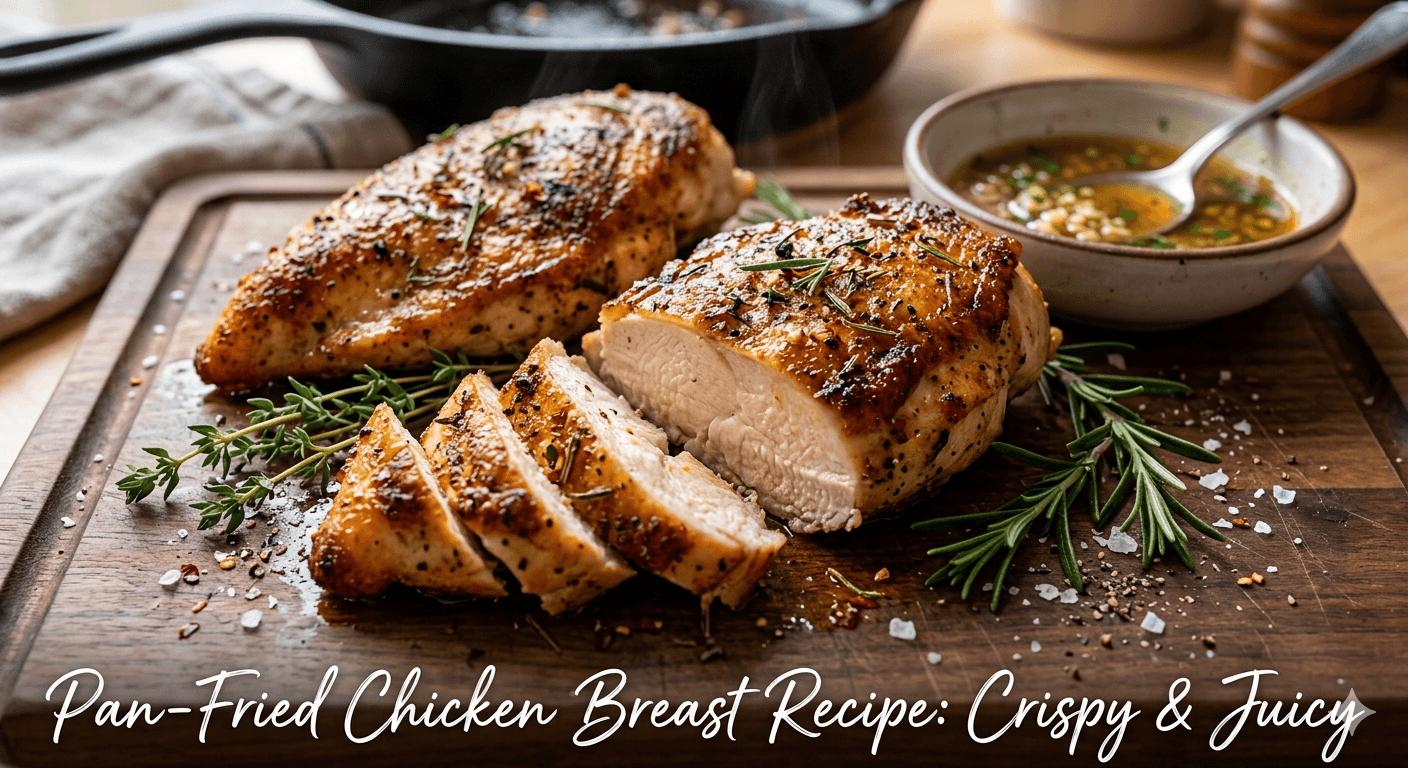
Easy Pan-Fried Chicken Breast Recipe: Crispy & Juicy
It is this time, when standing at the cooktop, seeing a chicken breast simply sitting in the pan, and thinking, Is it really cooking, or is it going to dry out on me again? And when that hesitation is familiar, you are not alone. The trick to making a perfect, easy pan-fried chicken breast is reduced to a few minor details that most recipes overlook. This guide takes you through each of them: when, temperature, oil, and texture. No guesswork.
Table of Contents
Why Most Pan-Fried Chicken Breast Recipes Turn Out Dry
Chicken breast dries out because of uneven thickness: the thin part overcooks while the thick part catches up. It will not be resolved by using a recipe from the book. The answer is easy: pound the chicken to a consistent 3/4 inch with a meat mallet or heavy pan. Evenness means even cooking. One step transforms dry, chalky chicken into juicy, well-cooked meat.
I learned this the slow way. Made the same dry chicken for months before someone pointed it out.
Ingredients
- 2 boneless, skinless chicken breasts (about 6–8 oz each)
- 2 tablespoons avocado oil or vegetable oil
- 1 teaspoon garlic powder
- 1 teaspoon smoked paprika
- ½ teaspoon onion powder
- Salt and black pepper, to taste
- Optional: a small squeeze of lemon after cooking
How to make Pan-Fried Chicken Breast: Step-by-Step Method
This method works for standard boneless breasts. Follow the steps in order. Skipping or rushing any of them tends to be where things go sideways.
Put the chicken in a zip-lock bag or between two pieces of plastic wrap. Use a meat mallet or rolling pin to pound to about ¾ inch throughout. This step isn’t optional if you want juicy results.
Wipe both sides thoroughly with paper towels; excess moisture can ruin a crispy crust. Season each side lightly with salt, pepper, garlic powder, paprika, and onion powder.
Preheat the skillet appropriately. Use medium-high heat. , place a heavy-bottomed pan or cast-iron skillet. Let it heat for 2 to 3 minutes before adding oil. The pan should feel very hot when you hold your hand a few inches above it. Add oil and heat until it shimmers; that’s your signal.
Place the chicken in a pan away from you. Don’t press it down. Don’t move it. Allow it to sit undisturbed for 6 to 7 minutes. This contact time creates the golden crust through the Maillard reaction.
Flip only when the chicken comes out of the pan with ease. If it sticks, it’s not ready. Cook the second side for 5 to 7 minutes, adjusting based on thickness.
Check the internal temperature. Use a meat thermometer. Remove the chicken from the heat when it reaches an internal temperature of 165°F (74°C). This is the USDA’s recommended safe temperature for poultry, eliminating any guesswork.
Rest before cutting. Before slicing, let the chicken rest on a plate for five minutes. Cutting too early releases all the juice. This rest is what keeps it moist inside.
Pan-Frying Chicken Breast: Cook Time by Thickness
The question “How long to pan-fry a chicken breast?” depends almost entirely on thickness. Here’s a reliable reference:
| Thickness | First Side | Second Side | Total Time (approx.) |
|---|---|---|---|
| ½ inch | 4–5 min | 3–4 min | 7–9 min |
| ¾ inch (recommended) | 6–7 min | 5–6 min | 11–13 min |
| 1 inch | 7–8 min | 6–7 min | 13–15 min |
| 1¼ inch (thick breast) | 8–9 min | 7–8 min | 15–17 min |
Always verify with a thermometer regardless of time. Times are guides, temperature is the truth.
According to All-Clad’s cooking guide, managing temperature zones in the pan is key; thinner pieces need about 6 minutes and thicker ones closer to 9 minutes per side, depending on the heat.
What is a safe internal temperature for chicken breast?
I investigated the temperature extensively using highly trusted sources like the USDA, which recommended 165 degrees F (73.9 degrees C).
Coverage: All poultry parts (breasts, thighs, legs, wings, ground)
Pull the chicken at 160°F if you want, since carryover heat will finish it to 165°F during the rest. But don’t pull it lower than that. Under-cooked chicken is a real food safety issue, not a texture preference.
Best Oil for Pan Frying Chicken Breast
This comes up a lot. The short answer: use an oil with a high smoke point. You’re cooking over medium-high heat, and the oil needs to be handled without burning.
| Oil | Smoke Point | Flavor | Best For |
|---|---|---|---|
| Avocado oil | 520°F / 271°C | Neutral | Best overall pick |
| Vegetable oil | 400°F / 204°C | Neutral | Everyday use |
| Canola oil | 400°F / 204°C | Very mild | Budget option |
| Olive oil (light) | 465°F / 240°C | Mild | Good if used right |
| Extra virgin olive oil | 375°F / 190°C | Fruity | Not ideal at high heat |
Butter alone burns at this temperature. If you want the flavor, add a knob of butter in the last two minutes of cooking and baste the chicken; that’s the sweet spot.
Suggestions for Making a Crunchy, Golden Exterior
Crispiness tips
- Ensure that the surface is completely dry before applying seasoning. Any dampness will lead to steaming the chicken instead of allowing it to sear.
- Use a cast-iron skillet for even, steady heat retention. Thinner pans create hot spots.
- Don’t overcrowd the pan. Two breasts max in a 10-inch skillet. Crowding traps steam.
- Don’t move the chicken for the first 6 minutes. The crust needs time to form before it can release cleanly.
- Make sure to adequately heat the pan before adding oil, and then add the oil before placing the chicken in. That sequence matters for the crust.
- A light dusting of flour or cornstarch before cooking can boost crunch without being a full breading.
Food Safety Tips for Pan Frying Chicken
Food safety reminders
- Never press raw chicken and cooked chicken on the same surface without washing in between.
- Use a meat thermometer; visual cues like color or juice clarity are not reliable.
- Store cooked chicken in the refrigerator for 2 hours. It remains safe to eat for 3 to 4 days when kept in an airtight container.
- Thaw frozen chicken in the fridge overnight, not on the counter.
- Wash your hands carefully after handling raw poultry.
Chicken breast is one of the most protein-dense foods you can cook. According to Healthline, 100g of cooked skinless chicken breast provides about 31g of complete protein, covering roughly 60% of daily protein needs for many adults. It also contains niacin, B6, and selenium. Research referenced by the Delta Calendar notes that chicken breast is a strong source of essential vitamins for energy metabolism and immune support.
It’s also worth noting that a PubMed nutritional study found that breast meat has distinct vitamin levels, particularly thiamin and riboflavin, compared to other cuts, making it a consistently high-quality protein source for those watching their intake.
Chicken Breast Meal Prep Ideas
This recipe’s ability to scale is one of its best features. Cook four or six at once on the weekend, and you’ve got protein ready for the whole week.
- Cut into slices and serve with roasted vegetables over rice.
- Chop into salads; it holds up better than boiled chicken
- Layer into grain bowls with quinoa and greens
- Wrap in a flatbread with hummus and cucumber
- Reheat with a little broth in a pan to keep it moist
For similar chicken breast meal prep ideas, check out this Recipe for juicy air-fried chicken breast. It’s a solid option when you don’t want to stand over the stove.
More chicken recipes you might like
- Recipe for Air-Fried Bone-In Chicken Thighs.
- 30 minutes of crispy air-fried chicken drumsticks.
- Frozen chicken wings in an air fryer.
- Recipe for Air-Fried Chicken Tenders.
FAQ for Pan-Frying Chicken Breast
How long to pan-fry a chicken breast?
What is a chicken breast’s safe internal temperature?
How can I prevent chicken from sticking to the pan?
Can I substitute frozen chicken for this recipe?
What are common mistakes when pan-frying chicken?
Easy Pan-Fried Chicken Breast Recipe (Crispy & Juicy
Ingredients
Equipment
Method
- Place chicken breasts in a zip‑lock bag or between plastic wrap. Pound to ¾ inch thickness throughout. This ensures even cooking.
- Pat both sides thoroughly with paper towels. Moisture prevents browning and creates steam
- Season both sides lightly with salt, pepper, garlic powder, smoked paprika, and onion powder.
- Heat a heavy skillet over medium‑high heat for 2–3 minutes.
- Add oil and heat until it shimmers.
- Place chicken in the pan away from you.
- Do not press or move it.
- Cook 6–7 minutes undisturbed to form a golden crust.
- Flip only when the chicken releases easily.
- Cook the second side 5–7 minutes, adjusting for thickness.
- Use a meat thermometer.
- Remove from heat at 165°F (74°C) internal temperature.
- Let the chicken rest 5 minutes before slicing to keep juices inside.
Notes
- Pound chicken to ¾ inch for even cooking and juiciness.
- Dry the surface completely before seasoning for a crisp exterior.
- Preheat the pan well; add oil only after the pan is hot.
- Don’t overcrowd the skillet — two breasts max in a 10‑inch pan.
- Don’t move the chicken for the first 6 minutes; the crust needs time to form.
- A light dusting of flour or cornstarch can increase crispiness.
- Safe internal temperature: 165°F (74°C) (USDA).
- Pull at 160°F if you prefer; carryover heat finishes the rest.
- Store cooked chicken within 2 hours; lasts 3–4 days refrigerated.
- For meal prep: slice for salads, bowls, wraps, or reheat with a splash of broth.
The End of Hunger
Pan-frying chicken breast gets unfairly blamed for being difficult. It’s not. It’s just unforgiving of two or three specific mistakes that most recipes gloss over. Pound it even. Dry it well. Allow the pan to get hot. Do not move the chicken until it has released on its own. Use a thermometer.
That’s most of it. Get those steps right, and the rest almost takes care of itself.
If you’ve been cooking chicken breast for years and still getting dry results, try pounding it first. Just that one change. It’s probably where the problem lives.


